
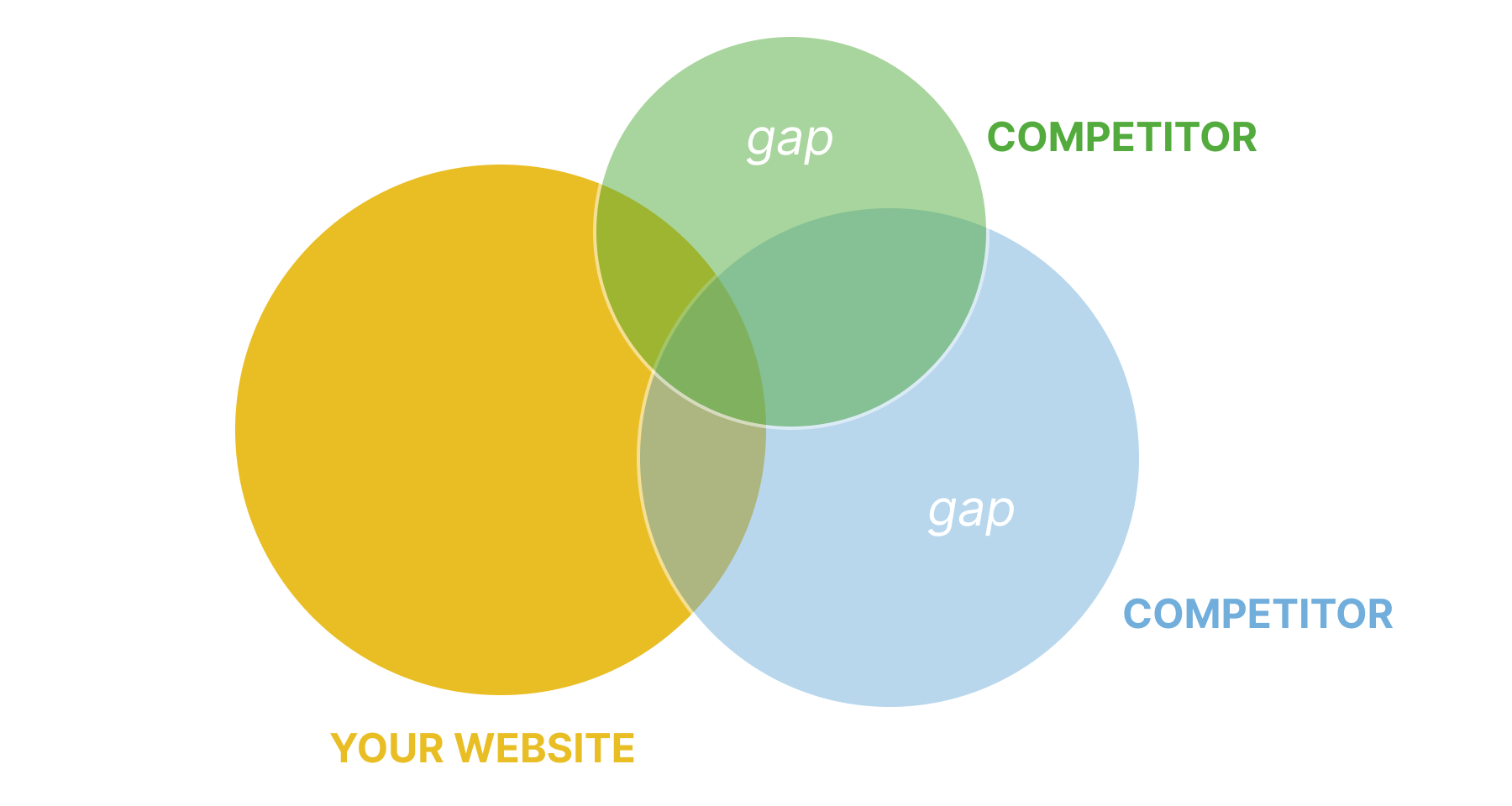
Competitor Keyword Gap vs Content Gap is an important comparison for SEO planning. Both approaches identify opportunities for stronger organic visibility. The main difference is the type of opportunity. Keyword gap research focuses on search terms missing from a website compared with competing websites. Content gap research focuses on missing information, topics, questions, and useful details within existing content.
What Is a Competitor Keyword Gap?
Competitor Keyword Gap vs Content Gap starts with understanding ranking differences. A competitor keyword gap identifies search terms where competing websites achieve rankings while a target website has limited or no visibility.
Keyword research can show many possible opportunities. Search volume, competition, relevance, search intent, and business value should guide the final selection. A missing keyword does not automatically require a new page. Some terms can fit naturally into an existing page.
For example, a website about project management software may rank for “project management software” but miss “project management software for small business.” A competitor ranking for the longer query can reveal a useful opportunity. The missing phrase can support a new section, an improved page, or a dedicated article.
What Is a Content Gap in Competitor Keyword Gap vs Content Gap?
A content gap appears when a page does not provide information expected for a topic or search intent. Missing areas can include definitions, examples, comparisons, steps, benefits, limitations, statistics, or frequently asked questions.
A page may target the correct primary keyword and still have weak topical coverage. Searchers may expect examples or answers to related questions. Adding useful information can improve relevance and create a more complete resource.
Key Difference
The biggest difference in Competitor Keyword Gap vs Content Gap is the source of the opportunity. A keyword gap comes mainly from ranking data. A content gap comes mainly from content analysis and search intent.
A keyword gap asks which search terms are missing. A content gap asks which useful information is missing. Both approaches can work together. Keyword research can identify an opportunity. Content analysis can determine what information should appear on the resulting page.
How to Use Competitor Keyword Gap vs Content Gap Together
Start with competitor research. Select relevant websites that compete for similar searches. Compare ranking keywords and identify terms with strong relevance. Remove unrelated terms and prioritize opportunities based on intent, demand, difficulty, and business value.
Next, group related keywords into clear topics. Avoid creating separate pages for every small variation. Similar search terms can often support one useful page when search intent is closely aligned.
Then review competing pages. Examine headings, subtopics, questions, examples, supporting evidence, and page structure. This stage can reveal information missing from current content.
For additional guidance, Ahrefs provides a Content Gap resource that explains competitor-based keyword research. A related internal resource is Search Entity vs Keyword, which provides further context about entities and keywords.
Choosing the Right Action
Competitor Keyword Gap vs Content Gap can lead to different SEO actions. A keyword opportunity may justify a new article, landing page, category page, or section. A content opportunity may require expanding an existing page instead.
Prioritize keyword gap research when a website has limited visibility across valuable topics. Prioritize content gap research when an important page already exists but lacks sufficient depth or coverage.
The best decision depends on search intent. A new keyword does not always mean a new URL. A missing topic does not always require a completely new article. Careful analysis prevents unnecessary pages and keeps content organized.
Final Thoughts
Competitor Keyword Gap vs Content Gap represents two connected but different SEO methods. Keyword gap analysis focuses on missing search visibility. Content gap analysis focuses on missing information and topic coverage.
A practical workflow can combine both methods. Compare competitors, identify valuable search terms, group related queries, review existing pages, identify missing information, and select the most suitable content action.
This approach creates a more focused SEO strategy for sustainable organic search growth. It supports better content planning, stronger topical coverage, and more useful pages without relying on keyword targeting alone.