
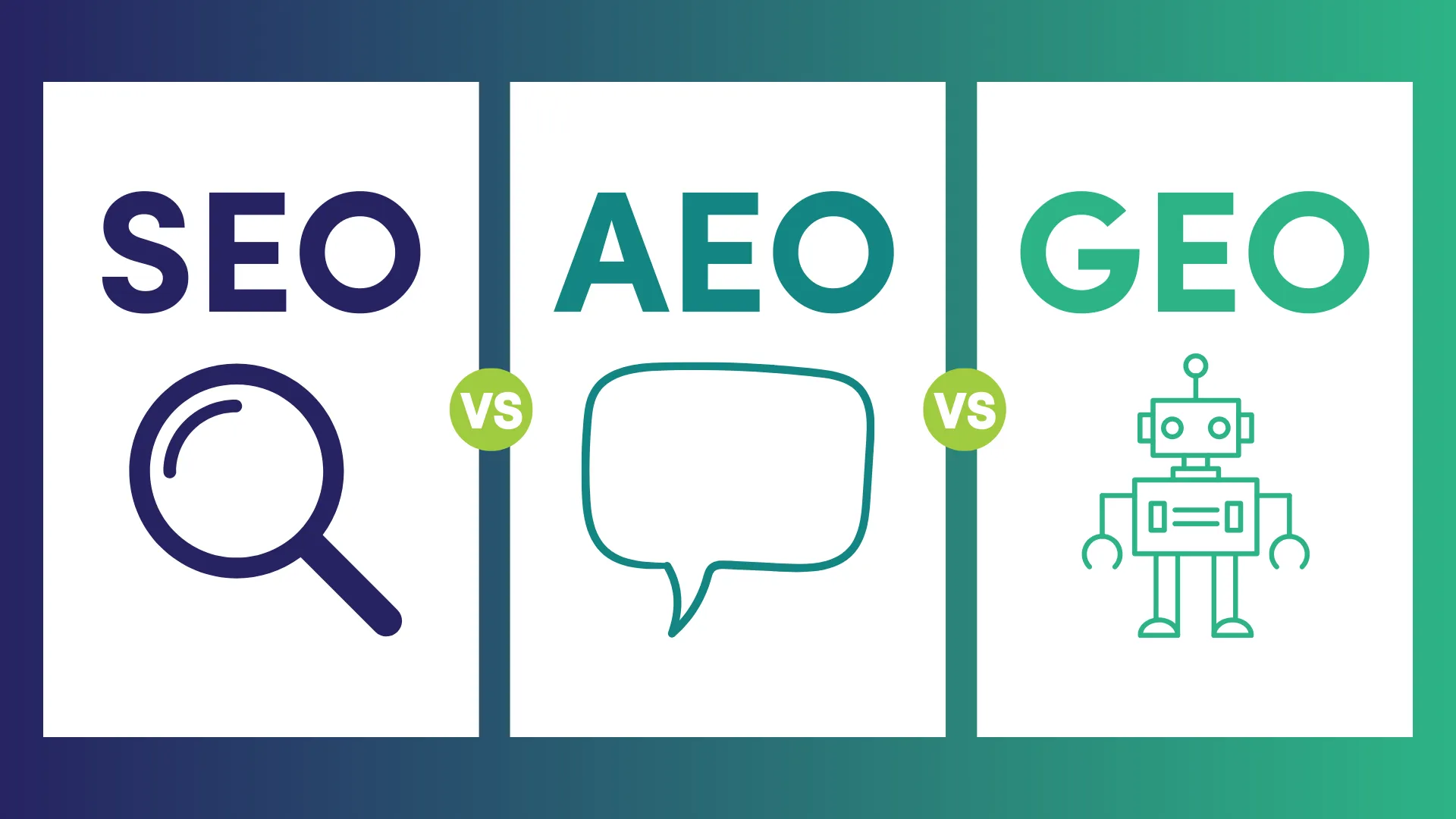
A complete SEO AEO GEO Content Strategy brings three search approaches into one clear content plan. SEO supports visibility in traditional search results. AEO supports direct answers. GEO supports visibility across generative search experiences. A unified approach gives each content asset a clear purpose.
What Is an SEO AEO GEO Content Strategy?
An SEO AEO GEO Content Strategy organizes content around rankings, answers, and AI-generated discovery.
SEO focuses on crawlability, keywords, useful pages, internal links, technical quality, and organic visibility. AEO focuses on questions, concise answers, headings, and content that can satisfy answer-based searches. GEO focuses on clear information, topical relevance, original insights, brand mentions, and content that can be understood by generative systems.
The three areas can share the same content foundation. A strong article can target a keyword, answer related questions, and provide information suitable for AI-generated responses.
Start With Search Intent
Search intent should guide every content decision. Keyword research can identify informational, commercial, navigational, or transactional intent. Question research can reveal the information expected from an answer.
An SEO AEO GEO Content Strategy starts with one main topic and several related questions. Supporting questions shape headings and sections. Related terms add context without forcing repetitive keywords.
A clear intent map also prevents content overlap. Each page needs a defined purpose. Similar pages can create confusion when several URLs target the same search need.
Build Content Around Topics
Topic structure matters across traditional and AI search. A central page can cover the main subject. Supporting pages can cover narrower subtopics. Internal links can connect related information.
A content hub about AI search can include pages about AEO, GEO, search intent, entity SEO, content freshness, and AI visibility. Each page can answer a specific need while strengthening the wider topic.
For a deeper comparison of the three approaches, see SEO vs AEO vs GEO: What’s the Difference.
Make Answers Easy to Extract
AEO requires clear answers. Important questions should receive direct responses near the beginning of relevant sections. Headings should describe the question or topic clearly. Short paragraphs improve scanning.
Definitions, step-by-step explanations, factual statements, and concise summaries can improve content clarity. Strong formatting supports readers and systems that process page content.
An SEO AEO GEO Content Strategy should avoid unnecessary filler. Every section should add useful information.
Strengthen Generative Search Visibility
GEO adds another layer to content planning. Generative systems may use information from multiple sources before producing a response. Clear facts, original research, expert commentary, statistics, and relevant third-party references can strengthen information around a topic.
Content should also maintain consistent brand information. Business descriptions, services, products, authorship, and key claims should remain accurate across important pages.
An SEO AEO GEO Content Strategy can include original data and distinctive insights instead of relying only on commonly repeated information. Fresh updates also matter when facts, products, regulations, or industry conditions change.
For additional reading on the overlap between SEO, AEO, and GEO, see Ahrefs: GEO, LLMO, AEO… It’s All Just SEO.
Improve Technical Foundations
Technical SEO remains important. Pages need accessible content, logical navigation, useful internal links, descriptive titles, and a structure that search crawlers can process.
Page experience also affects usability. Slow pages, broken links, confusing navigation, and inaccessible content can weaken the content experience.
An SEO AEO GEO Content Strategy should include technical checks before publication. Content quality and technical quality should work together.
Measure Different Search Signals
Measurement should cover more than traditional rankings. SEO reporting can include organic clicks, impressions, rankings, indexed pages, and conversions. AEO reporting can examine answer visibility, featured results, question coverage, and citations. GEO reporting can monitor AI mentions, citations, brand references, and referral traffic where reliable data is available.
An SEO AEO GEO Content Strategy becomes stronger when performance data guides future updates. Pages with weak visibility can receive better answers, clearer structure, stronger evidence, or improved topical coverage.
Keep the Strategy Consistent
Research, planning, writing, optimization, publishing, and measurement should follow a repeatable process.
An SEO AEO GEO Content Strategy also keeps editorial priorities clear during every content update.
An SEO AEO GEO Content Strategy creates a practical framework for modern search. The goal is to build useful, clear, trustworthy content that can perform across multiple search experiences.