
People search online for different reasons. Understanding Informational vs Commercial Search Intent can help you create content that matches what users actually want.
These differences are important for SEO because the same topic can attract people at different stages of their decision-making process.
Two of the most important types to understand are informational and commercial search intent. They may look similar at first, but they serve different purposes.
Knowing the difference between Informational vs Commercial Search Intent can help businesses choose the right content format and SEO strategy.
What Is Search Intent?
Search intent refers to the reason behind a user’s query. It describes what a person hopes to find or accomplish when using a search engine.
Galactic Fed describes search intent as the purpose behind a user’s online search and discusses several major intent categories
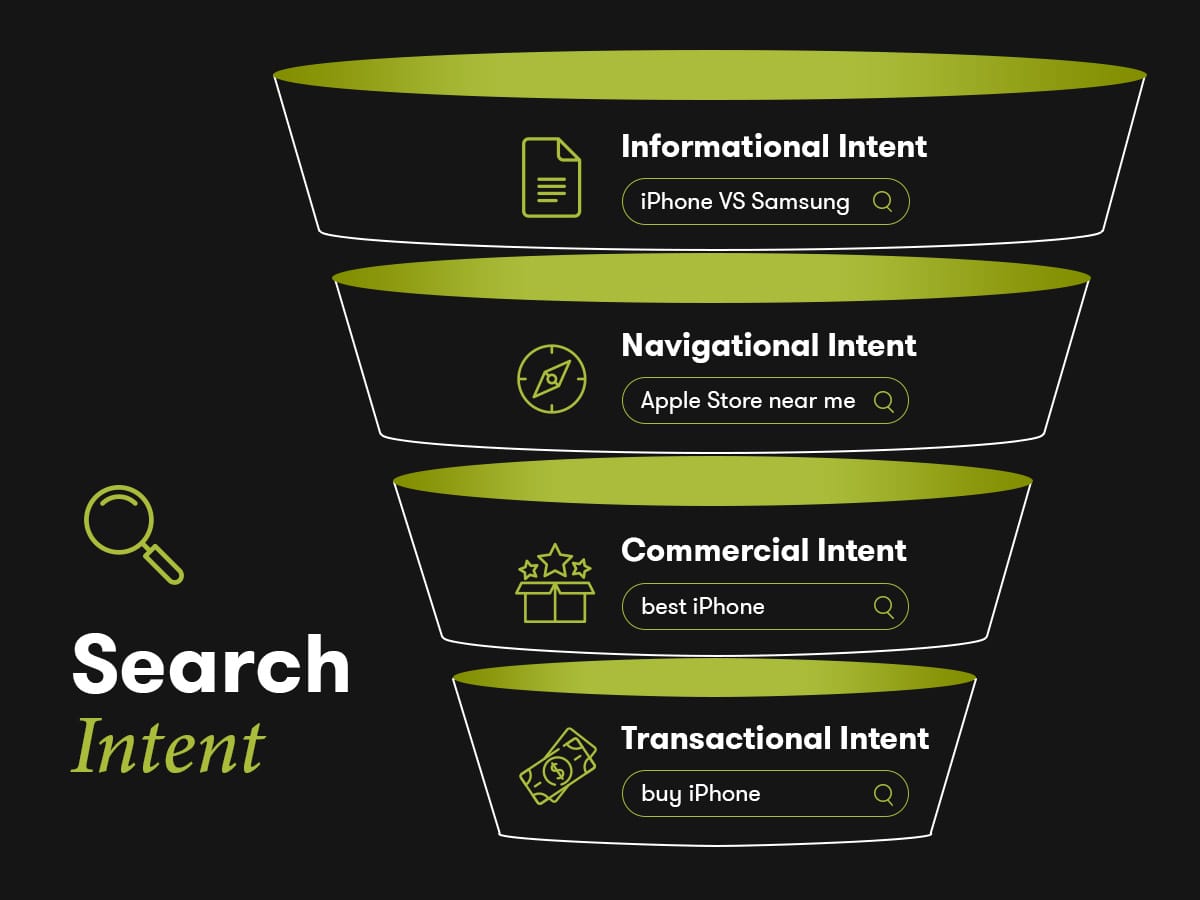
Search intent is commonly divided into four categories:
- Informational intent
- Commercial intent
- Transactional intent
- Navigational intent
This guide focuses on the first two.
Informational intent is mainly about learning. Commercial intent is related to research before making a decision.
Knowing which type you are targeting can affect the topic, structure, language, and purpose of your content.
What Is Informational Search Intent?
Informational search intent happens when a person wants to gain knowledge or understand something.
The main goal is information.
The user may want an explanation, definition, guide, answer, or deeper understanding of a subject. A purchase is not necessarily the immediate goal.
This type of intent is important at the early stages of the user journey. People need reliable information before they can make informed decisions.
What Content Matches Informational Intent?
Content designed for informational intent should focus on clarity and usefulness.
Common formats include:
- Guides
- Tutorials
- How-to articles
- Educational blog posts
- Definitions
- Explanations
- Research-based content
- Frequently asked questions
The content should answer the main question directly. Supporting information can then help the reader understand the topic more fully.
What Is Commercial Search Intent?
Commercial search intent appears when a person is researching options before making a decision.
The user is usually closer to taking action than someone with purely informational intent. However, they may still need more information before choosing a product, service, or solution.
The focus is often on evaluation.
People with commercial intent may want to understand differences, assess quality, review available options, or determine whether something is suitable for their needs.
Semrush describes commercial intent in relation to searches where users are researching products or services before making a purchase decision.
What Content Matches Commercial Intent?
Commercial content should help users evaluate their available choices.
Useful formats include:
- Comparison pages
- Product reviews
- Service comparisons
- Buying guides
- Product category pages
- Detailed evaluations
- Alternatives pages
- Feature comparisons
The content should provide enough information for users to make a more informed decision.
Informational vs Commercial Search Intent: What Is the Difference?
The main difference is the user’s immediate goal.
| Informational Intent | Commercial Intent |
| Focuses on learning | Focuses on evaluation |
| User wants information | User wants to assess options |
| Usually earlier in the journey | Usually closer to a decision |
| Educational content works well | Comparison and review content works well |
| Main goal is understanding | Main goal is deciding |
The two types are different, but they are not completely separate.
A person can begin with informational research and later develop commercial intent as they learn more about a topic.
Informational vs Commercial Search Intent: Learning vs Evaluating
The simplest way to understand the difference is to look at the user’s purpose.
Informational intent answers:
“What do I need to know?”
Commercial intent answers:
“Which option should I consider?”
This difference affects how content should be written.
Informational content needs to be explained. Commercial content needs to help users evaluate.
Both require useful and trustworthy information, but the direction of the content is different.
Informational vs Commercial Search Intent in SEO
Understanding Informational vs Commercial Search Intent is important when planning an SEO content strategy. Informational content can help a website build visibility around a wider topic.
A well-developed informational page can address important questions and provide useful knowledge. This can also help a website develop stronger topical coverage.
The focus should not be on adding keywords repeatedly.
Instead, the content should clearly explain the subject and satisfy the user’s information needs.
Good informational content should have:
- A clear topic
- Useful headings
- Direct answers
- Easy-to-read paragraphs
- Relevant supporting information
- Accurate information
- A logical structure
The quality of the information matters more than simply making the article longer.
Why Commercial Intent Matters for SEO
Commercial content serves users who are already considering their options.
These users may need more specific information before making a decision. Content that supports evaluation can therefore play an important role in the conversion journey.
Commercial pages should make important information easy to find.
This may include information about features, differences, benefits, limitations, pricing factors, or other details that affect a decision.
The purpose is not to pressure the reader.
It is to provide useful information that supports a more informed choice.
How to Identify Informational Search Intent
There are several signals that can help identify informational intent.
Look at the wording of the query and ask what the user is trying to understand.
Words and phrases associated with informational intent often include:
- What
- Why
- How
- Guide
- Meaning
- Definition
- Benefits
- Information
- Tutorial
These signals are useful, but they should not be treated as absolute rules.
The actual meaning of a query depends on its context.
How to Identify Commercial Search Intent
Commercial intent usually has stronger signals related to evaluation.
Users may be looking for information that helps them compare or assess an option.
Common signals include:
- Best
- Top
- Review
- Comparison
- Alternatives
- Vs
- Features
- Pricing
- Worth it
Again, these terms are indicators rather than guarantees.
The actual search results can also provide useful clues about what type of content users expect.
Use Search Results to Understand Intent
One useful way to understand search intent is to study the results for a target query.
Look at the types of pages that appear.
If the results mainly contain educational guides, definitions, and informational articles, the query may have strong informational intent.
If the results contain comparison pages, reviews, product pages, or buying-focused content, commercial intent may be more prominent.
This approach helps content creators understand what search engines are currently interpreting as relevant for the query.
Can One Topic Have Both Types of Intent?
A topic can attract both informational and commercial intent.
This happens because users do not always follow a perfectly linear journey.
Some people are learning. Others are already researching a possible solution.
This is why keyword research should not stop at identifying the main phrase. Content planning should also consider the different needs connected to that topic.
However, one page does not always need to target every type of intent.
A clear primary purpose usually makes the content easier to understand.
How to Create Content for Informational Intent
When targeting informational intent, start with the question the reader wants answered.
Keep the explanation direct.
Use headings to divide major ideas. Keep paragraphs short. Remove unnecessary wording that does not help the reader understand the topic.
It is also useful to provide supporting information that answers related questions.
The goal is to make the page genuinely useful rather than simply targeting a keyword.
How to Create Content for Commercial Intent
Commercial content needs a different approach.
Readers are often evaluating whether an option meets their requirements.
The content should therefore make important decision-making information easy to find.
Focus on:
- Clear comparisons
- Relevant features
- Important differences
- Strengths and limitations
- Pricing considerations
- Suitability
- Supporting evidence
- Clear explanations
Avoid making unsupported claims.
Commercial content becomes more useful when readers can understand the information without being pushed toward a particular decision.
Informational vs Commercial Search Intent in AI Search
AI search is also changing how Informational vs Commercial Search Intent appears in user queries.
People can provide additional context and ask follow-up questions. This means intent can become more specific during a single search journey.
For content creators, understanding this change is becoming increasingly important.
A useful approach is to focus on the underlying need rather than relying only on exact keyword phrases.
For more information about this wider change, read How Search Intent Has Changed With AI Search.
Informational and Commercial Intent Work Together
These two forms of intent should not always be treated as competing strategies.
Informational content can help people understand a subject.
Commercial content can help them evaluate available options.
Together, they can support different stages of the user journey.
A website with both types of content can provide information for people who are still learning as well as those who are closer to making a decision.
The important part is keeping each page focused on its intended purpose.
Final Thoughts
Informational vs Commercial Search Intent represents two important user needs
Informational intent focuses on learning and understanding. Commercial intent focuses on research and evaluation before a decision.
Neither should be treated as simply a keyword category.
The most useful approach is to understand why the user is searching and create content that matches that purpose.
When content meets the right intent, it becomes easier for users to find the information they need and move through their journey naturally.