
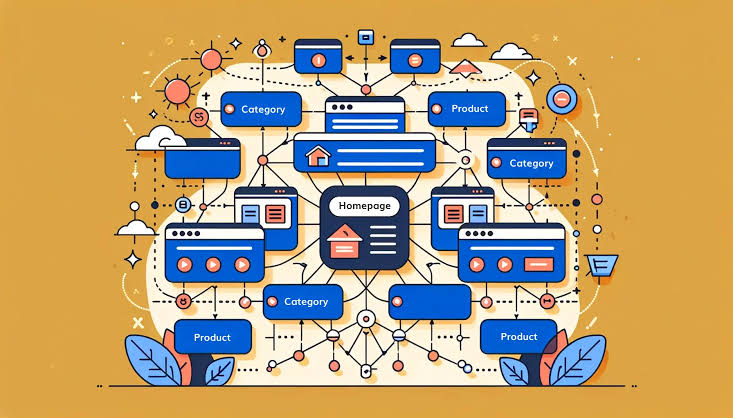
Managing links is easy when a website has only a few pages. As a website grows, however, connecting hundreds or thousands of pages becomes much more difficult. This is where internal linking strategies become important.
Large websites need a clear system for connecting articles, product pages, categories, services, and other important resources. Without one, useful pages can become difficult to discover, while other pages may receive more internal links than they actually need.
Good internal linking strategies help create a website structure that is easier to navigate, maintain, and understand.
Why Large Websites Need a Linking System
A large website is constantly changing. New content is published, old pages are updated, URLs are redirected, and new sections are added.
Without consistent internal linking strategies, these changes can create disconnected pages and weak pathways between related content.
Internal links help visitors move between relevant pages. They also create relationships between different sections of a website. For large websites, these connections should be planned rather than added randomly.
1. Organize Pages Into Clear Sections
The first step in developing effective internal linking strategies is understanding your website structure.
Group related pages into clear categories and subcategories. A website selling different products, for example, may separate pages by product type, while a content website may organize articles by topic.
Clear sections make it easier to identify which pages should be connected.
They also reduce the risk of creating links between pages that have little relationship with each other.
2. Identify Your Important Pages
Not every page has the same purpose.
Some pages may be important because they generate traffic, support major topics, explain key services, or contribute to business goals.
Effective internal linking strategies should give these pages appropriate connections from relevant content.
This does not mean adding links everywhere. Instead, identify the pages that deserve attention and build relevant pathways toward them.
3. Connect Related Content
One of the most useful internal linking strategies is connecting pages that naturally support each other.
When an article discusses a subject in general, it can link to another page that provides more detailed information about that subject.
This helps readers continue their research without having to search for the next page themselves.
For more information about the relationship between internal links and topical authority.
4. Link New Pages From Existing Content
Publishing a new page does not mean the work is finished.
One practical internal linking strategies is to find older pages that are already relevant to the new content. Add links from those pages where the new resource genuinely provides additional value.
This gives the new page connections within the existing website instead of leaving it isolated.
Making this part of your publishing process can prevent orphan pages from building up over time.
5. Fix Orphan Pages
An orphan page has few or no meaningful internal links pointing toward it.
Finding these pages should be part of your internal linking strategies, especially when managing a large website.
Review your website regularly and identify pages that are difficult to reach through normal navigation.
SEO.Archi’s site architecture checklist discusses areas such as crawl depth, internal link flow, orphan pages, and URL structure.
6. Use Natural Anchor Text
Another important internal linking strategies is using descriptive anchor text.
The clickable words should give readers a reasonable idea of what they will find on the destination page.
Avoid using the exact same anchor text repeatedly when different natural wording would make more sense. The link should fit the sentence rather than look like it was added only for a keyword.
Natural anchor text also makes the content easier to read.
7. Manage Links at Scale
Large websites cannot always review every link manually.
Scalable internal linking strategies should include regular checks for broken links, orphan pages, weak connections, irrelevant destinations, and important pages that receive very few internal links.
Automation and crawling tools can help identify opportunities, but the final linking decisions should still consider relevance and context.
Digital Applied’s guide to large-site internal linking discusses areas such as crawl depth, pillar-cluster structures, anchor diversity, and managing internal links across thousands of pages.
8. Review Your Structure Regularly
Websites change over time, so internal linking strategies should also be reviewed regularly.
A page that was highly relevant six months ago may no longer be the best destination for a particular link. New content may also create better opportunities for connecting related pages.
Regular reviews help keep the website structure accurate and useful.
9. Avoid Too Many Unrelated Links
More links do not automatically make a website better.
Effective internal linking strategies focus on relevance rather than quantity. Adding links to unrelated pages can make navigation confusing and weaken the connection between topics.
Each link should have a clear purpose and provide value to the reader.
Final Thoughts
Strong internal linking strategies help large websites manage growing amounts of content without creating a confusing network of pages.
The process involves organizing content, identifying important pages, connecting related resources, fixing orphan pages, using natural anchor text, and reviewing links regularly.
For a large website, internal linking strategies should be part of the content publishing and maintenance process rather than something added only after problems appear.
With a consistent system, internal linking strategies can create clearer pathways between pages and help a growing website remain organized as more content is added.